

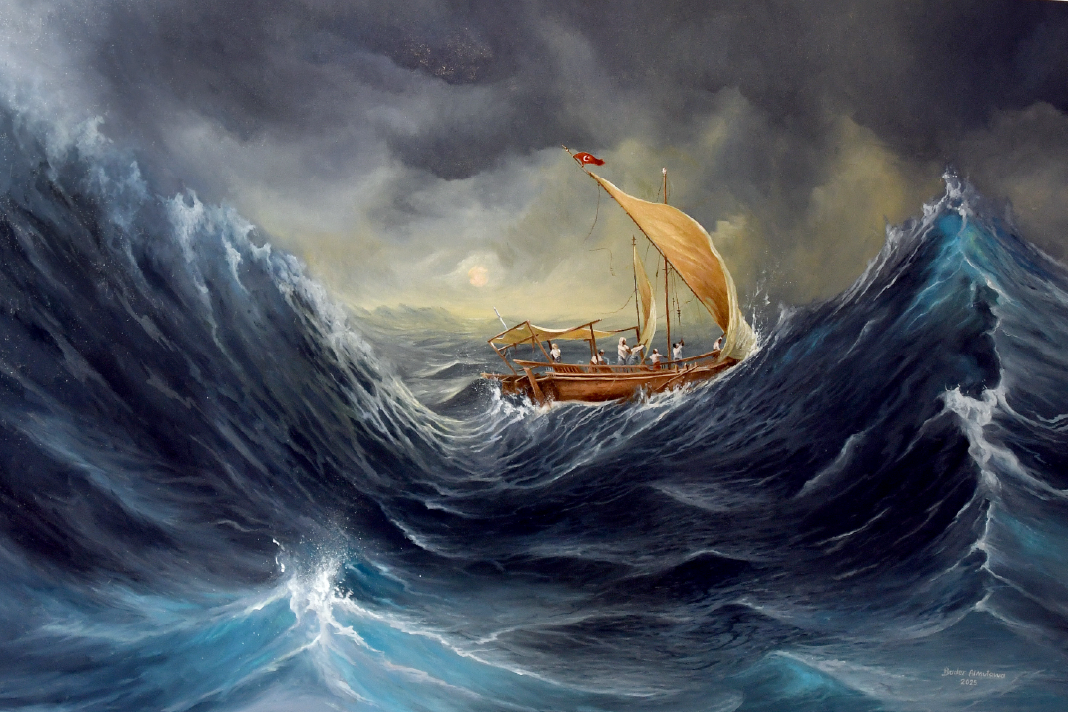
Year of Tab’ah
“The Year of the Sinking” (Sanat al-Tab’ah) an oil painting. Inspired by imagination, this work depicts “the year of the sinking”—a term used in the Kuwaiti dialect to refer to the loss of ships at sea. It commemorates a year in which many Kuwaiti vessels were lost due to a maritime cyclone that struck between India and Muscat, in the Indian Ocean, before the ships could reach the Strait of Hormuz—the gateway to the Arabian Gulf. This event took place in the year 1288 AH (corresponding to September 1871 AD), and only a very few ships managed to survive.
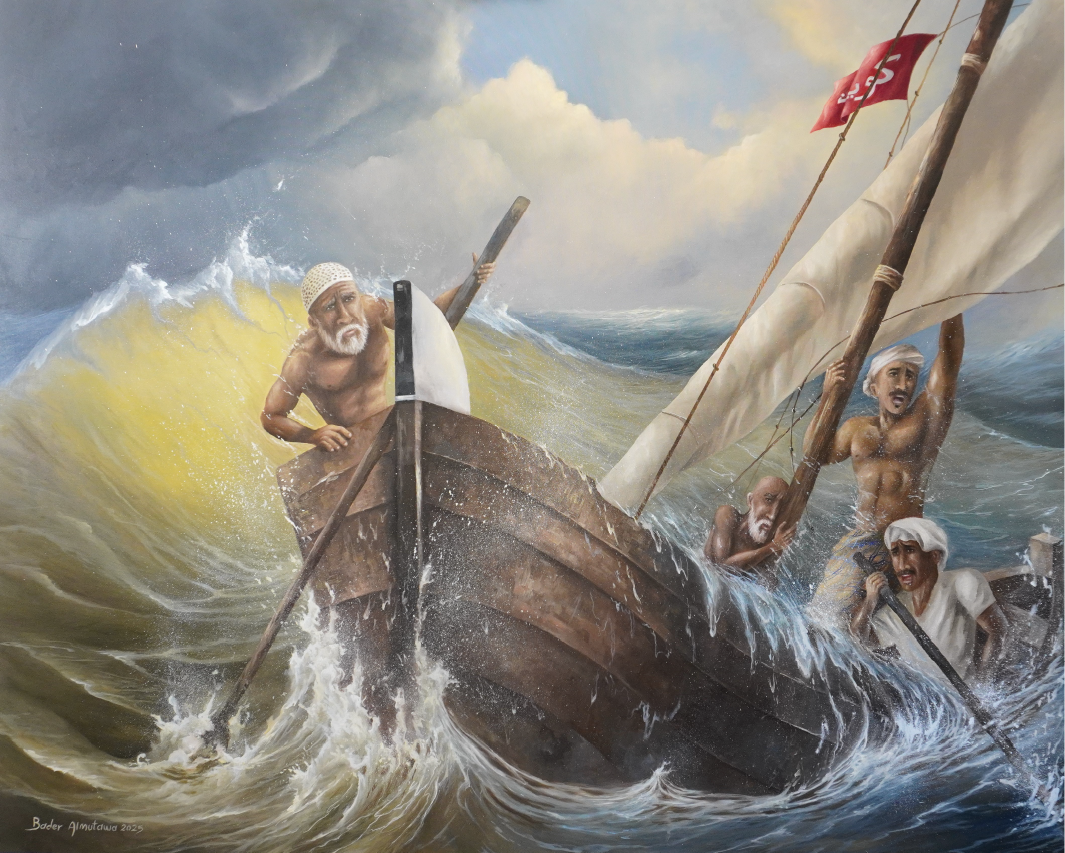
Bas ya bahar
On the night of Friday, October 2, 1925 , specifically along the eastern coast of the Arabian Peninsula, as the pearl-diving season drew to a close and the rainy season began—four Kuwaiti divers set out with a larger group to fish and search for pearls, in pursuit of a livelihood and a decent life. In the middle of the night, fierce winds arose, accompanied by torrential rain. The sea surged and roared; its waves rose high, crashing violently. The wind and rain tossed the ships in every direction, causing them to collide with one another. Amidst this, the voices of the people rose—crying out in supplication, pleading for divine intervention, and seeking refuge in God’s mercy. They struggled against the terrors of that pitch-black night, surrounded by the desperate calls and cries for help echoing from all sides. In the end, none of the four [protagonists] survived; as for the rest of the pearl divers, some met their deaths, while others managed to survive. This account relates to the year of “Al-Tab’ah” (The Great Sinking) in 1925. The characters depicted are purely fictional; yet, I firmly believe that our ancestors endured great hardships to earn their daily bread—their sacrifices embodying the very highest ideals of humanity.
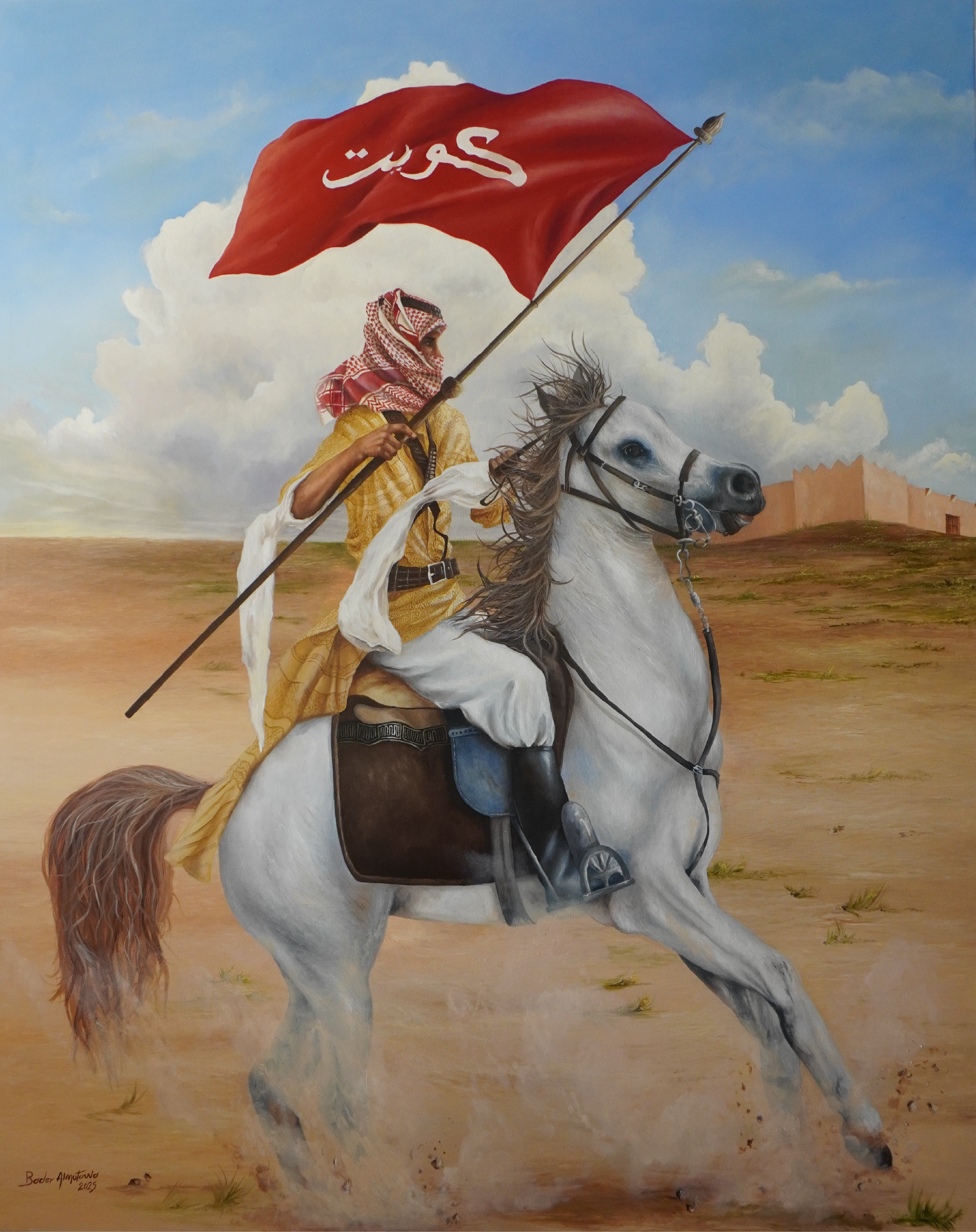
Al berag Flag
An oil painting on canvas (200×160 cm) that brings an imagined scene to life: a gallant Kuwaiti soldier from the past, bearing a battle standard, the bayraq (an early flag of Kuwait), signaling the army’s readiness for the Battle of Jahra in 1920.
The painting embodies the spirit of chivalry and pride through a Kuwaiti horseman, dressed in a dagla (traditional robe), in a symbolic moment that captures the essence of self-sacrifice and loyalty to the nation. It has been a fresh and remarkable artistic endeavor for me, documenting events from Kuwait’s rich history, infused with a touch of creative imagination!